
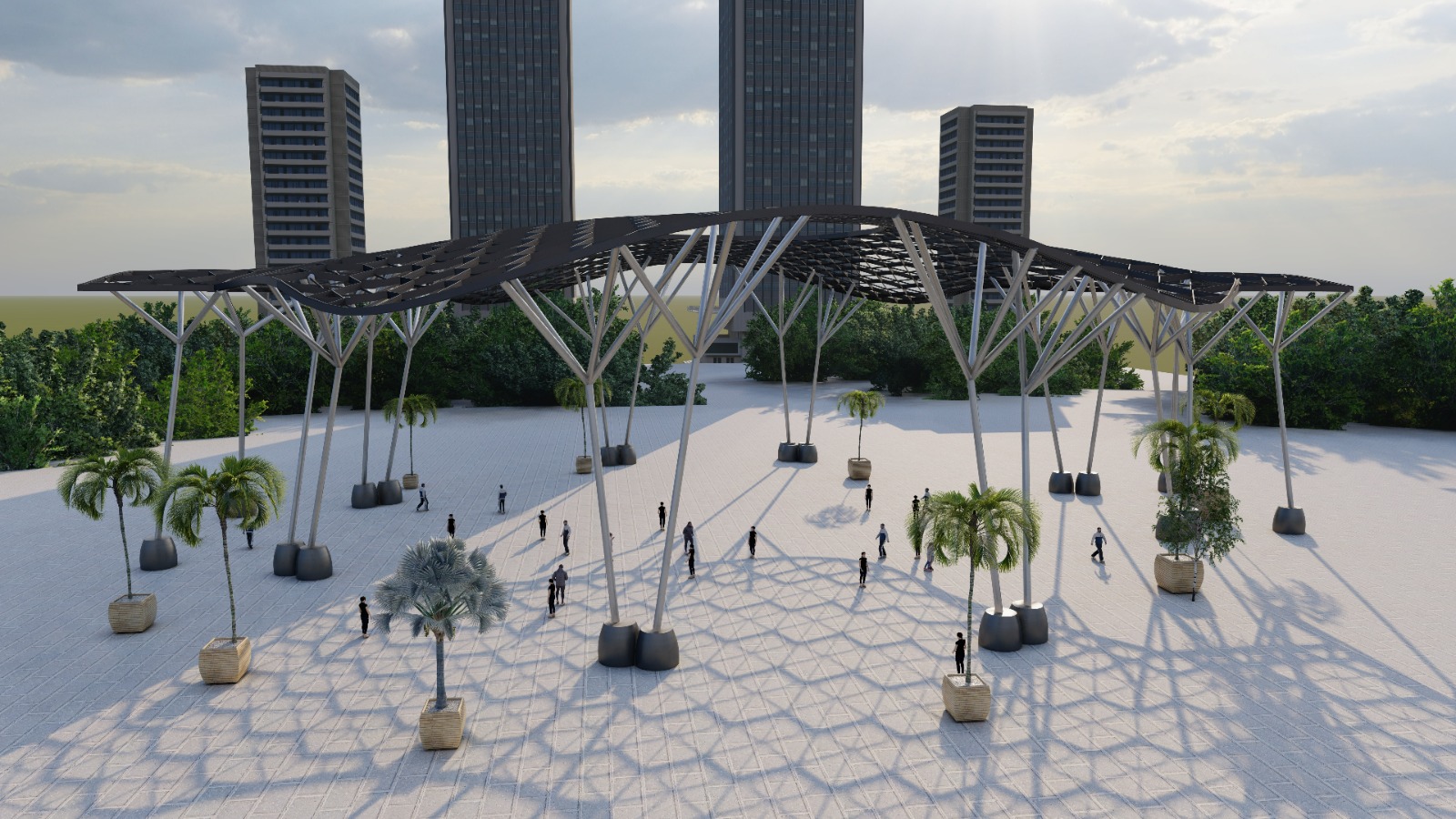
Today, architects are pushing the boundaries of traditional architecture and designing free-form structures inspired by nature. In this context, Single Layer Structures represent a significant innovation in the world of architecture.
Single Layer refers to structures where the main load-bearing layer is constructed on a single plane, a term that, in an architectural context, describes buildings where the primary load-bearing layer is formed within a single plane. While multi-layered structures are common in traditional architecture , Single Layer Structures offer a different perspective by combining minimalism and functionality.
What is a single-layer roof ?
"Single Layer Roof" is a specific concept in architectural and construction terminology, often referring to the roof structure of buildings. This term describes a roof design where the main load-bearing layer of the roof is constructed in a single plane.
Traditional roof designs are often multi-layered, meaning they involve complex structures where various materials and layers come together. However, Single Layer roofs take a more minimalist approach, arranging the roof structure in a single layer.
This design offers many advantages in terms of both aesthetics and practicality. Single-layer structure roofs provide a simpler appearance and can reduce costs by simplifying the construction process. At the same time, this design can offer a more modern and stylish look that harmonizes with its surroundings while fulfilling the basic function of a roof.
Single-layer roof designs are frequently used in projects seeking architectural diversity and embracing modern aesthetics. However, since each project has specific needs, the feasibility and advantages of a single-layer roof design should be carefully evaluated.
Advantages and Opportunities
Single-layer structures offer several aesthetic advantages. Inspired by nature, these free-form structures harmonize with their surroundings and stand out with their unique designs. Furthermore, the single-layer design simplifies construction processes and reduces costs.
Such structures can also reveal architectural solutions that were previously impossible. Single-layer designs allow architects to move away from linear forms and create more creative and organic designs. In this sense, single-layer designs represent an innovative step in the field of architecture.
Inspired by nature, these structures combine aesthetics and functionality, offering a new perspective in architectural design. The increasing popularity of single-layered designs in the architectural world may pave the way for even more interesting and original structures in the future.