
Space Roof & Space System
SPACE ROOF
Space frame structures are three-dimensional hyperstatic structural systems whose main elements are rod elements and point node elements. Although largely understood and applied as roof systems, space frame structures are post-modern architectural and constructive building systems that can provide a wide variety of functions.
ADVANTAGES
Space frame structures stand out in the construction industry with their advantages and wide range of applications, thanks to their general characteristics briefly outlined below.
"SPACE FRAME STRUCTURES are systems that can fully provide hyperstatic and three-dimensional load distribution."
A brief comparison with alternative planar frame systems will suffice to understand the hyperstatic nature of space frame systems.
In planar truss frame systems (truss roof systems), the load-bearing structure is formed in the same plane. In truss roof systems manufactured in this way, loads are distributed in the same plane, i.e., in 2 dimensions (Figure 2.a). Similarly, planar roof truss structures are placed parallel to each other on the roof and connected perpendicularly. For these reasons, load distributions are realized in perpendicular planes. Therefore, since they can be transferred in a limited geometry, steel elements are subjected to large loads, and this results in structural designs with very heavy sections, especially in large spans.
Furthermore, the reactions between flat truss roofs and the supporting structure cannot be distributed very evenly, which leads to higher costs for the supporting infrastructure.
In contrast, space frame systems achieve optimal load distribution by connecting the lower and upper horizontal bars, which form the system from the first support, with diagonal bars in a three-dimensional manner (Figure 2.b). This allows sudden and large loads to be divided into smaller parts and transferred to the nodal elements using circular cross-section bar elements with minimum diameter. Furthermore, since moments are zeroed at the point nodal elements, the structure does not transmit dome effects or moments. All elements are assumed to be subjected only to axial compressive and tensile forces.
"SPACE FRAME STRUCTURES are a type of building that can be manufactured and assembled very quickly due to their prefabricated nature."
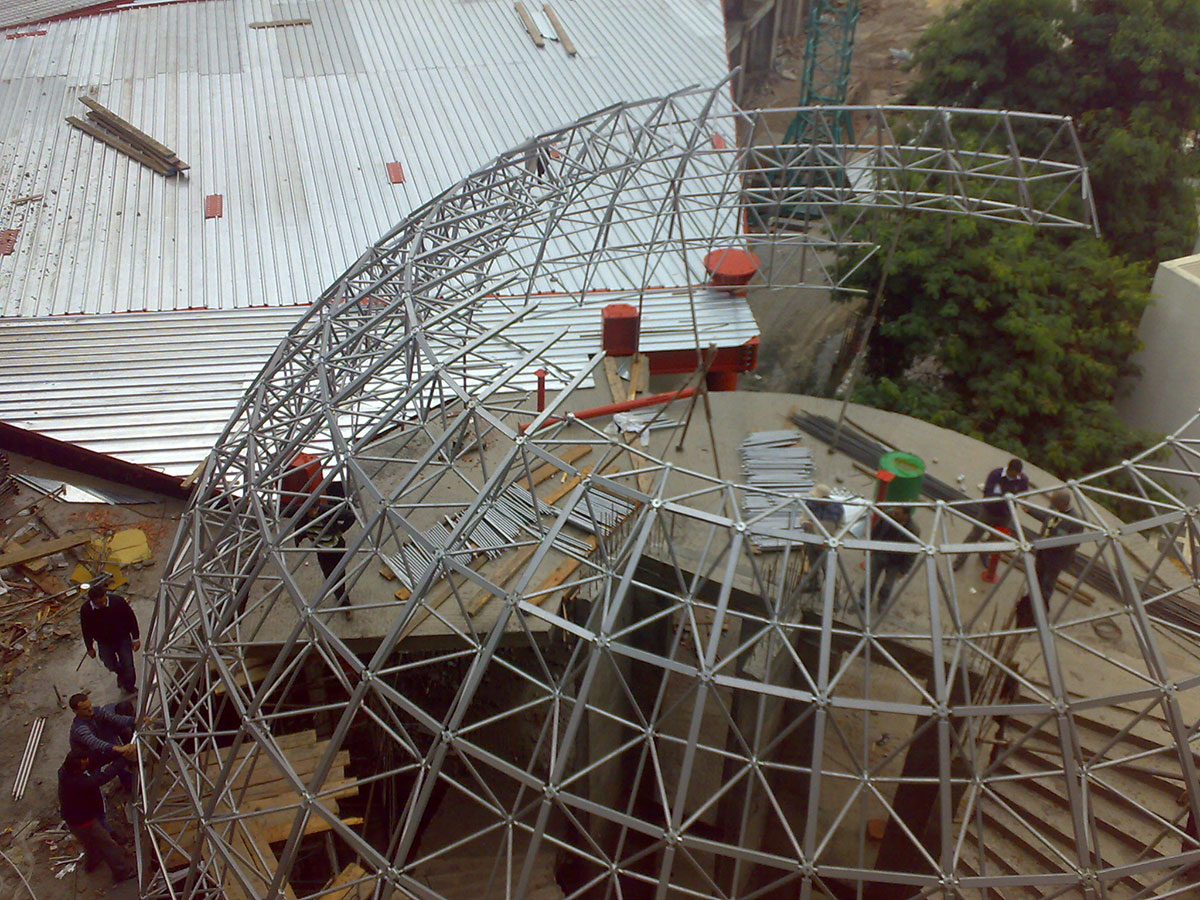
Space frame structures offer a significant advantage to the construction industry and investors due to their very short manufacturing and assembly times, as all fabrication takes place in-house and off-site. Depending on the location and environmental conditions of the structure, assembly is partially or completely done on-site, then lifted to roof level using mobile cranes or special lifting devices and secured to supports, or assembled at roof level using mobile scaffolding and platforms. While assembly time varies depending on the geometric characteristics of the structure and assembly conditions, it is clearly the fastest assembly system among its alternatives.
"SPACE TRUSS STRUCTURES ARE THE ONLY ALTERNATIVE FOR LARGE SPANISH AIRFIELDS."
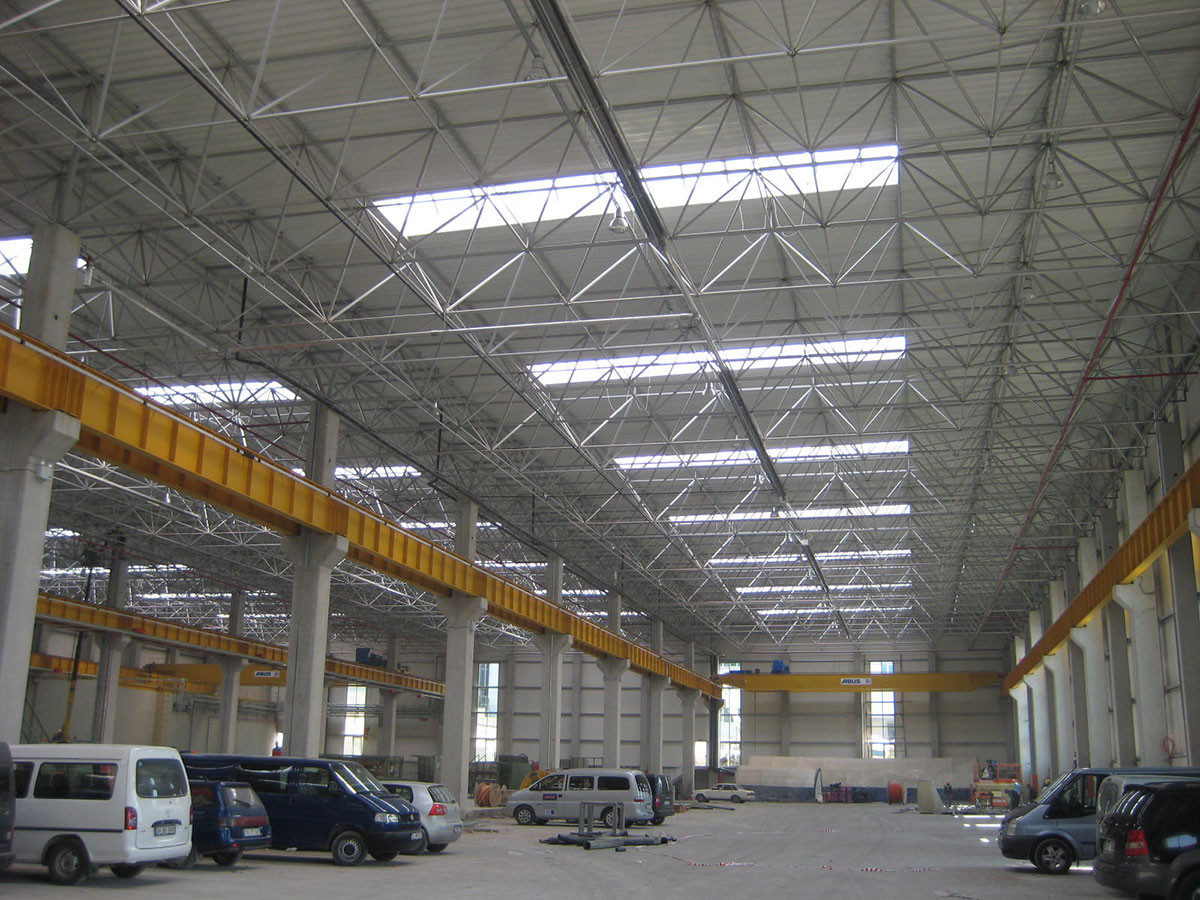
In structures such as factories, workshops, warehouses, and supermarkets, the number of load-bearing columns must be sufficient to avoid hindering workflow, material storage, and general circulation. For this reason, the roof system must be suitable for spanning large openings. Structures constructed with steel flat or reinforced concrete truss roof systems cannot adequately meet this requirement. Space frame roof systems, however, are suitable for spanning very large openings. Especially for free spans exceeding 25 meters, space frame roof systems are preferred as the most suitable system due to their economic costs, ease of assembly, and speed. Significant cost savings are also achieved during operation due to the uninterrupted use of the space.
"SPACE FRAME STRUCTURES ALSO ADD AESTHETIC ELEMENTS TO THE BUILDING."
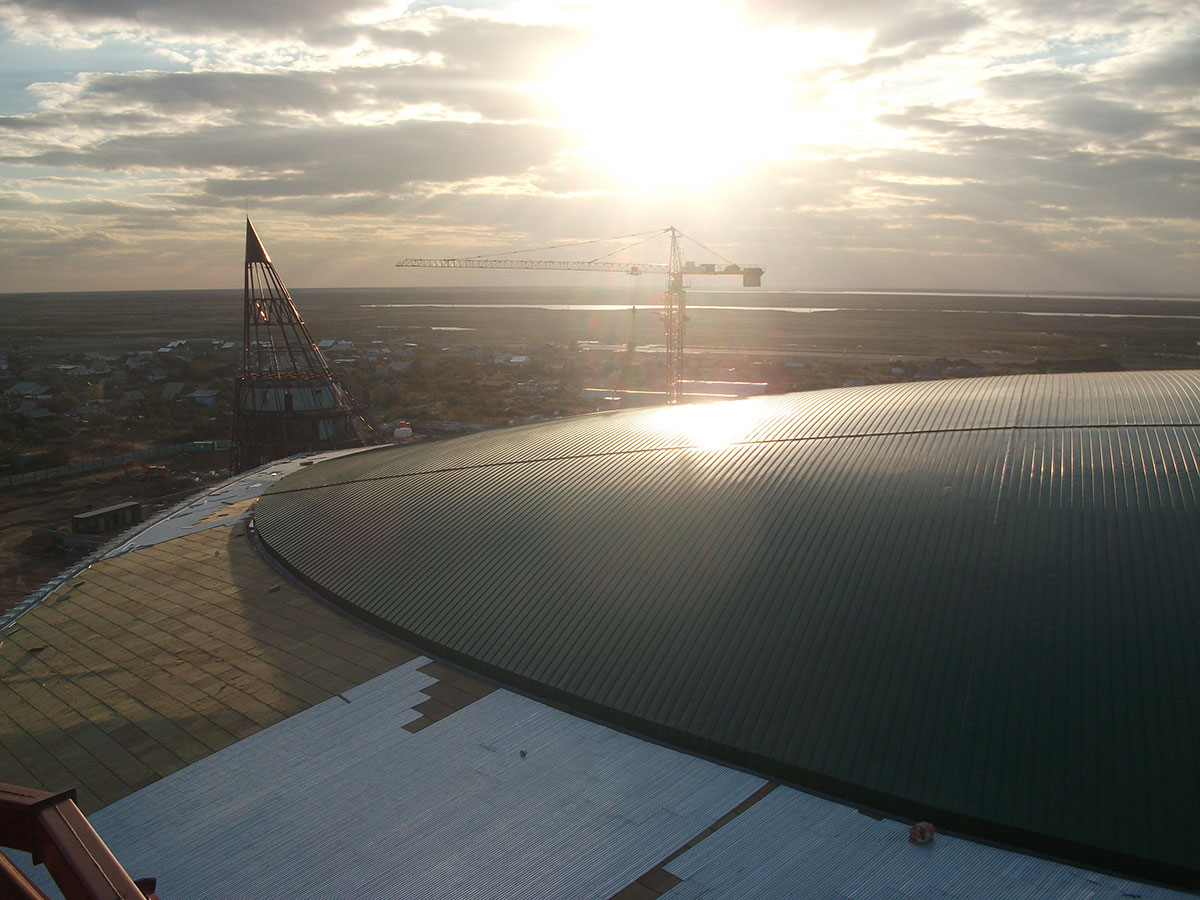
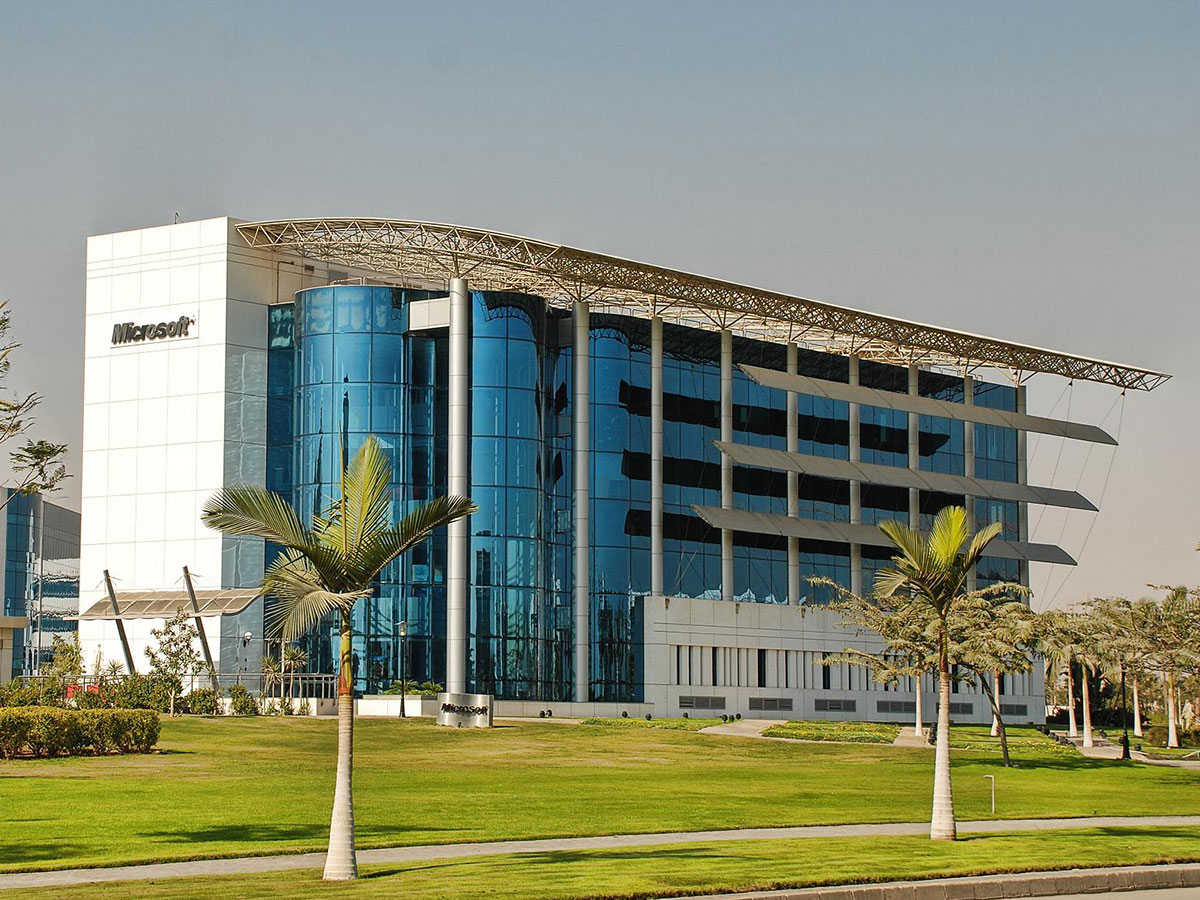
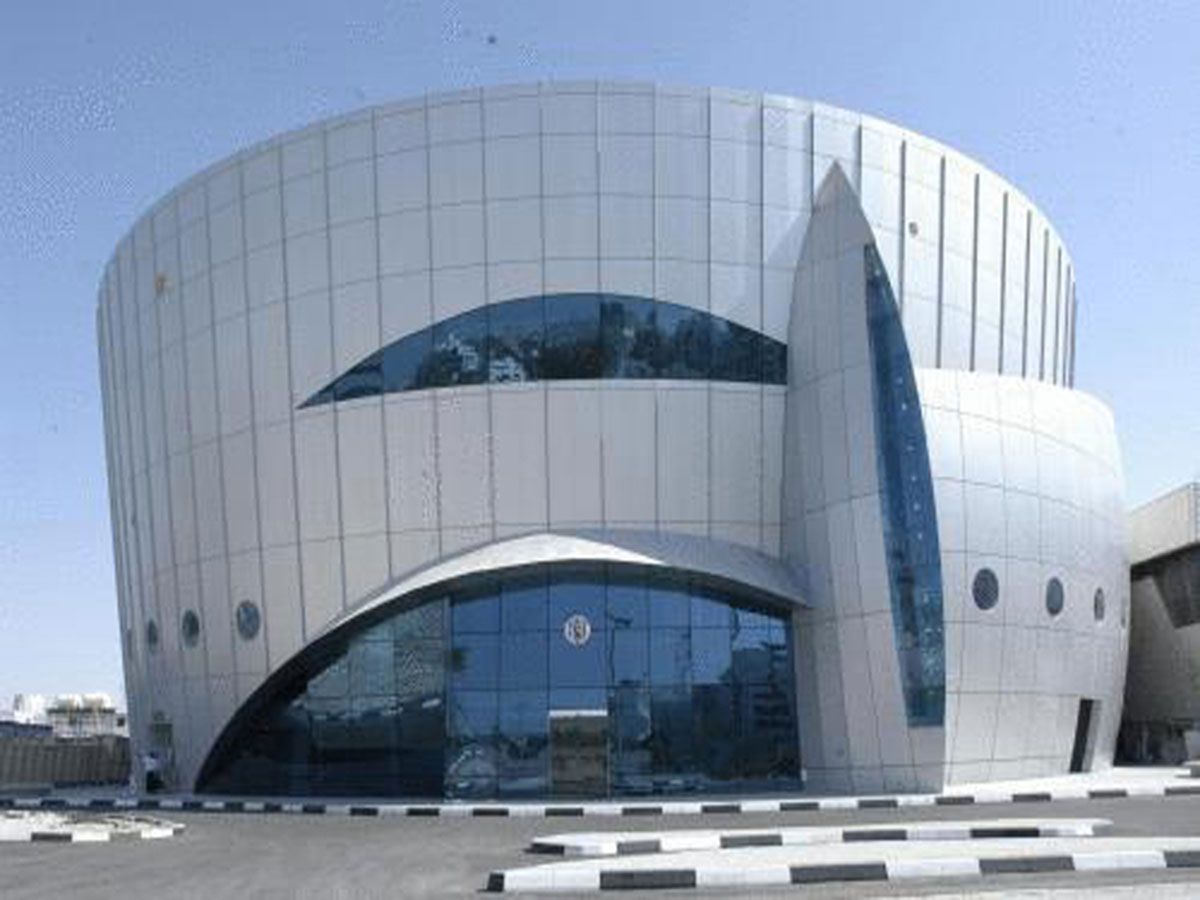
Space frame systems offer designers a wide variety of structural alternatives depending on the shape and geometry of the building. Using square, triangular, or hexagonal-based space frame modules, a wide range of postmodern horizontal and vertical steel structures can be created. The ability to quickly resolve these complex structures provides great convenience for designers. Furthermore, the system's ability to be painted in any desired color allows buildings to easily achieve an extraordinary appearance.
"SPACE FRAME STRUCTURES offer significant advantages as a system feature in all types of service load applications."
The extra holes drilled into the point connection elements of space frame structures facilitate easy mounting of the purlin system and also serve as natural fixing points for all types of service loads. Lighting fixtures, suspended ceilings, ventilation ducts, and electrical installations can be easily mounted to the roof using screw-on connection elements without causing any damage to the roof.
"SPACE FRAME SYSTEMS ARE LIGHTWEIGHT SYSTEMS."
Another advantage of space frame constructions is that they are much lighter than reinforced concrete and truss roof systems. Due to the low dead load, the cross-sections of the supporting columns and the foundation construction can be reduced, resulting in significant cost savings during the investment phase.
"SPACE FRAME STRUCTURES are a versatile building option that can be used in a wide variety of applications and for different purposes."
Space frame structures are widely used for a variety of purposes in countless locations, just a few of which are listed below.
- Factory and Warehouse Buildings, Aircraft Hangars
- Truck Garages, Terminal Buildings and Parking Lots
- Gas Station Canopies
- Shopping Malls, Supermarkets, Hypermarkets and Marketplaces
- Gyms, Indoor Swimming Pools, Tennis Courts, Equestrian Arenas and Multipurpose Sports Facilities
- Stadium, Covered Grandstand Roofs
- Cinemas, Theaters, Conference Halls, Performance Centers, Wedding or Multipurpose Halls
- Overpasses and Underpasses
TECHNICAL SPECIFICATIONS
The fundamental element that provides the prefabricated structural feature of Space Frame Systems is the modular system concept that constitutes the structure. The type of module that makes up the structure can be square, rectangular, triangular, or hexagonal, depending on the choice made during the design phase.
A module is defined by the following parameters; a = module size in the x-direction.
h = module depth,
qx, qy = module angles
When selecting modules, factors such as economy, ease of manufacturing and assembly, structural analysis requirements under the loads to which the system will be subjected, geometric conditions (axis spacing, etc.), and aesthetic elements should be considered.
Some key design criteria for space frame structures are summarized below:
1) This is the most frequently preferred and used square module type due to its ease of manufacturing and assembly, as well as its ability to provide the best load distribution. In this module, the module depth is determined by the equation a=b.
Furthermore, this module type offers great ease and therefore economy in manufacturing and assembly, and is referred to as a standard type module. In the standard module type, the horizontal bar elements and the diagonal bar elements have equal axis lengths. The necessary condition to achieve this is; the diagonal bar element axis dimension is;
d = a => q = 540, 44 , h = ax sin(45)
2) Furthermore, due to geometric and static constraints, the module angle q should be chosen between 60° > qx,y > 30° unless absolutely necessary. Otherwise, the 3D load distribution characteristic, which gives the system its hyperstatic structure, will be significantly reduced, and the system will exhibit load distribution characteristics close to those of a 2D system. Moreover, it is almost impossible for the rod elements to approach the spheres forming the nodes at angles of this magnitude without colliding with each other, and therefore, excessive and disproportionate increases in sphere diameters will be necessary.
3) Another important consequence of this is the proportional relationship between module dimensions and depth. Accordingly, a > h > a/2 should hold. In other words, the system depth should be chosen between half the module size and the module size itself.
4) The proportional relationship between the depth of the roof system and the critical span has been defined by studies conducted in recent years and is accepted as a preliminary design criterion, especially before the structural design, in relevant projects. Accordingly;
L = critical, free span, d = module depth.
In a square or rectangular module system, each module consists of 5 spherical nodal elements and 8 rod elements. However, considering the elements shared in repeating modules, the system will use 2 spherical elements and 8 rod elements per module. Therefore, the selection of module type and especially dimensions (a, b, h) directly affects the self-weight of the system and consequently its cost.
In space frame systems used as roof constructions, the bar elements cannot directly withstand moments. They only withstand axial compressive and tensile forces.
The loads are transferred through the purlins first to the steel spheres, which are the connecting elements of the system, and from there to the rod elements, distributing them in all directions in three dimensions within the roof system.
ROD ELEMENT PIPES
The main components of the system are circular, welded pipes made from low-carbon grade materials conforming to TS 301/3 and DIN 17100 standards, such as S185JR, J0, J2, S235JR, S235J0, S235J2, or S275JR, J0, J2. These pipes are formed conically at both ends using hot forging and welded with gas metal arc welding. In special cases, drawn steel pipes can also be used. Depending on the climate and weather conditions of the application site or the environmental conditions to which the products will be exposed, we use materials of S185, S235, S275, S355 grade and with JR, J0, J2 impact toughness.
| Nominal Diameter |
inch |
3/8" | 1/2" | 3/4" | 1" | 1 1/4" | 1 1/2" | 2" | 2 1/2" | 3" | 4" | 5" | 6" |
|
mm |
10 | 15 | 20 | 25 | 32 | 40 | 50 | 65 | 80 | 100 | 125 | 150 | |
| Outer Diameter |
mm |
17.2 | 21.3 | 26.9 | 33.7 | 42.4 | 48.3 | 60.3 | 76.1 | 88.9 | 114.3 | 139.7 | 165.1 |
| Thickness of the Meat |
mm |
2.35 | 2.65 | 2.65 | 3.25 | 3.25 | 3.25 | 3.65 | 3.65 | 4.05 | 4.5 | 4.85 | 4.85 |
CONICS
Conical elements are manufactured using C1020 - C1030 and S235 - S355 grade materials. They are produced from high-weldability steel using machining or hot forging methods according to their diameters, and are secured to both ends of the bar elements using gas metal arc welding. The welding process is performed semi-automatically on special machines without manual intervention. This eliminates errors that could be caused by workers.
BOLTS
Bolts are manufactured specifically for Uzay Sistem, and bolt tests are performed and evaluated according to ISO 898-1. The bolts used in the system are elements that work against tension in the rod components. They are selected with appropriate quality and cross-section according to the results of static analysis. They are generally manufactured and tested according to the mechanical properties described in ISO 898-1. Bolts with strengths of 8.8 (6400 kg/cm² yield strength, 8000 kg/cm² tensile strength) and 10.9 (9000 kg/cm² yield strength and 10400 kg/cm² tensile strength) are used.
NUTS
In the system, these parts both work against axial compressive loads along with the rod element and enable the bolt to be tightened to the ball during assembly using a wrench. They are manufactured from St-37 grade steel using machining methods, and channels of appropriate dimensions are cut into them using special molds in eccentric presses. The diameter and wall thickness of the nuts also vary according to the compressive force they will be subjected to and are manufactured specifically.
GLOBAL NODE ELEMENTS
Steel spheres, one of the connecting elements of the system, are produced in a spherical form with a solid body using hot forging techniques from C1040 quality steel material conforming to DIN 17200 standard. In Space System Space Frame Constructions, spheres with diameters of 60, 75, 90, 110, 132, 154, 160, 190, 200, and 240 mm are used in our projects according to static and geometric requirements. Holes suitable for the geometry of the work and the number of elements to be attached to the spheres are drilled using special machines and metric threads are cut according to DIN 13 standard. A maximum of 18 holes can be drilled on a sphere. These holes can be used not only for rod element assembly but also for applying service loads and mounting purlins.
DESIGN
UZAY SİSTEM prepares the design of the space frame constructions to be built under its contract, taking into account all the architectural and technical conditions of the infrastructure that will support the space frame system and the superstructure to which the roof will be covered. For this purpose, it ensures the highest level of cooperation with other project groups in the design phase, as in every stage of the project. In this sense,
"Modulation is selected to suit the desired architectural aesthetics and functions."
"Architectural alternative settlement studies are carried out."
"By examining the characteristics of the load-bearing infrastructure, the appropriate support system and types are selected to handle all horizontal and vertical loads to be transferred from the space frame structure."
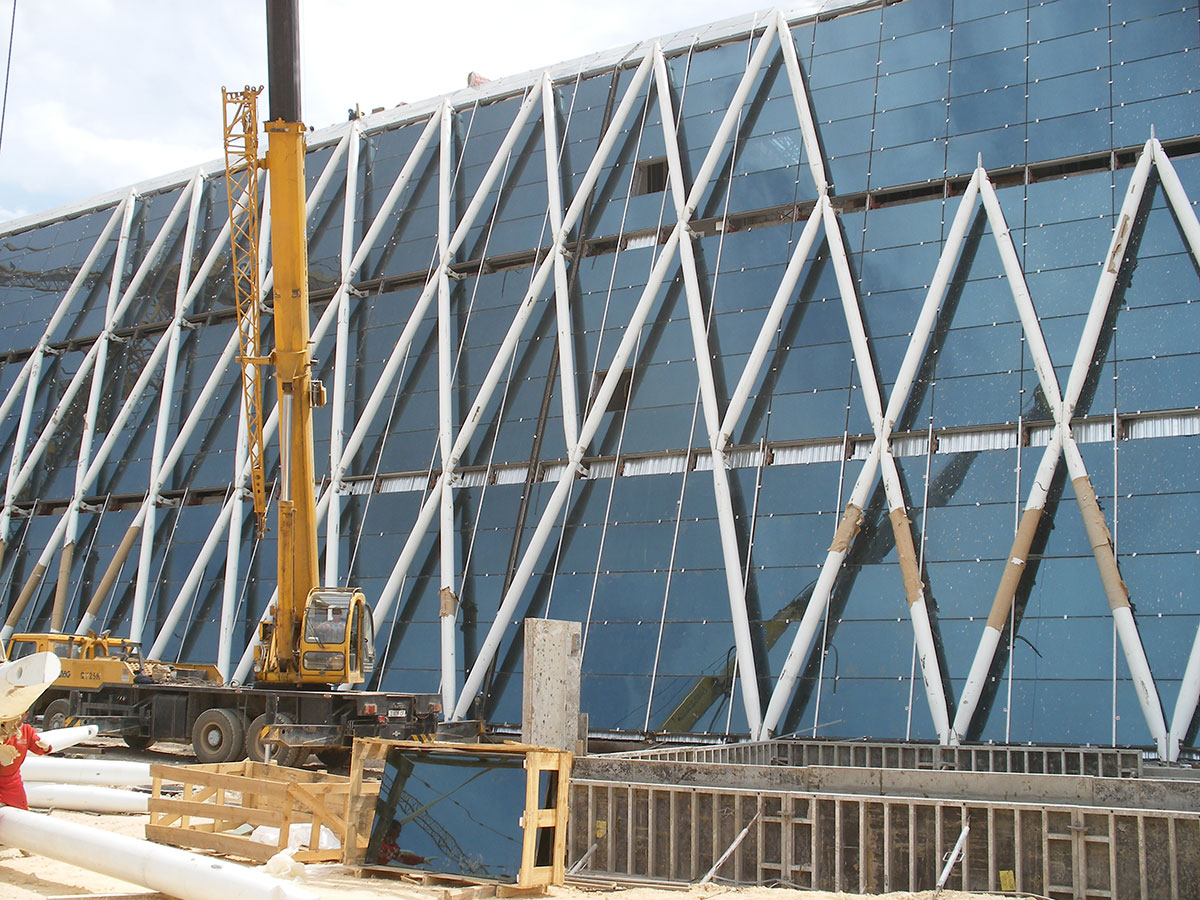
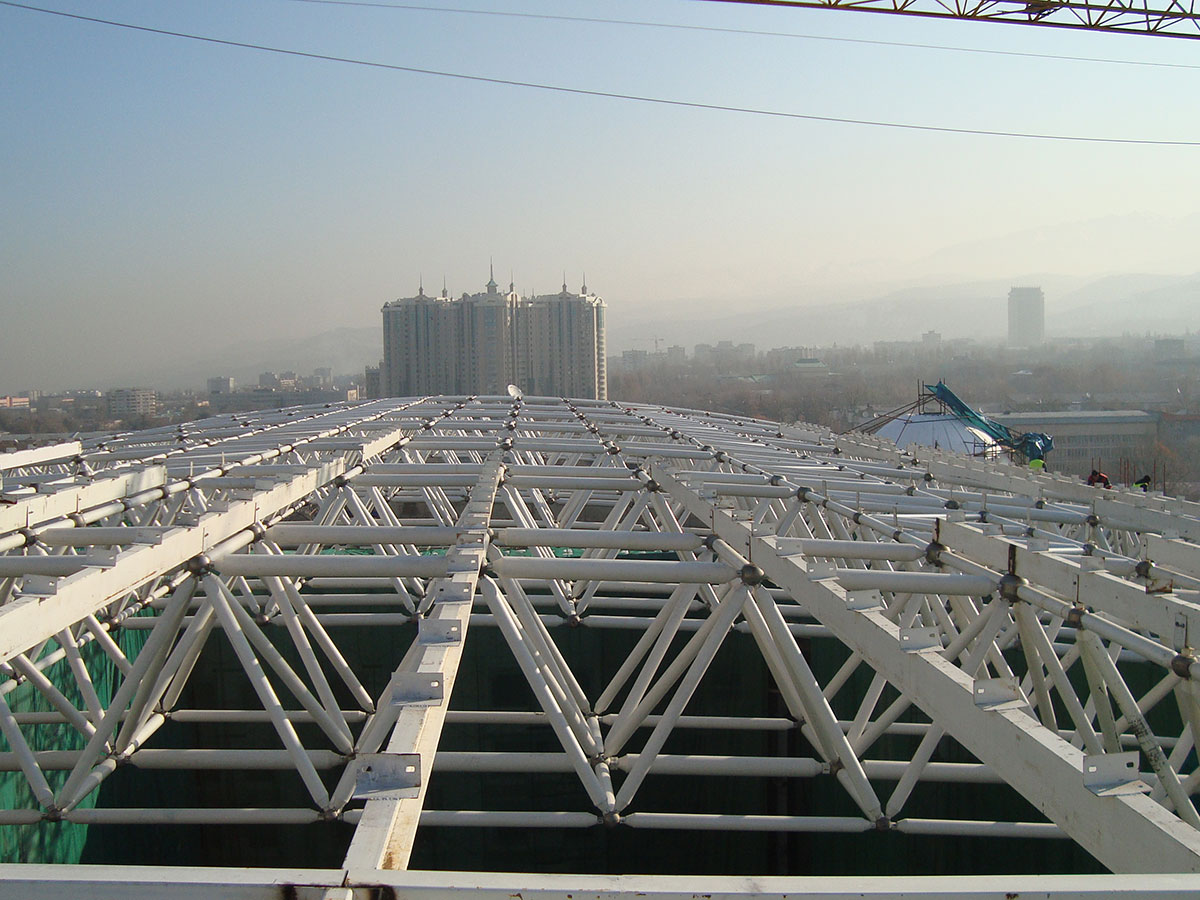
"If requested, consulting services including computer-aided photography and realistic visualization studies are provided to guide the pre-construction design of the building."
"Furthermore, following the control of the static and dynamic behavior of the space frame structure and the selection of modulation, point details regarding the structure's infrastructure and superstructure are studied."
"At this stage, the supports are dimensioned, and point details are created according to the required specifications for the purlin system and rainwater drainage systems that will form the substructure for the pavement."
"Before the system selection is finalized, preliminary analyses are carried out if requested, and all horizontal and vertical loads and displacement values to be transferred to the supporting infrastructure are reported to the client for review to ensure healthy working conditions with the supporting infrastructure."
"To this end, all necessary efforts are being made with dedication."
STRUCTURAL ANALYSIS
For structural analysis studies to be conducted effectively, it is necessary to identify all data related to the system.
Accordingly, the geometry of the structure, support points and types, all horizontal and vertical loads to be applied to the structure, the temperature difference that will affect the structure, and the definition of special loads are used to model the system in a computer environment.
The loads that will be applied to the system are as follows:
Vertical Loads:
Personal Load
Dead Loads:
Snow: The loads specified in TSE 498 are observed at a minimum. However, a minimum load increase of 50% is foreseen due to icing, rain, and excessive snowfall.
Purlin: The actual values of the purlin system are determined by UZAY SİSTEM. Cladding: Actual values are provided by the customer. Service Loads: Catwalk, Plumbing, Electrical, Suspended Ceiling, etc.
Mobile Loads: Personnel loads, mobile service loads.
Horizontal Loads:
Wind Load: The wind is applied uniformly from all directions, in accordance with at least TSE 498 standards and any special conditions, if applicable.
Earthquake: The equivalent earthquake load, calculated according to the latest earthquake regulations and the earthquake zones specified in TS498, is transmitted to the system as a uniformly distributed horizontal load.
The completed model is superimposed onto the architectural project for geometric verification. Structural analysis of the system is performed using specialized software developed by UZAY SİSTEM that employs the finite element method. All calculations are carried out in accordance with Turkish Standards and international norms.
MANUFACTURING
"One of the most important stages in Space Frame production is the welding of the rod elements. For this process, UZAY SİSTEM designed and manufactured its own semi-automatic and computer-aided machines."
"Data regarding the manufacturing of the components to be welded on the machines is sent from the central computer, and the axis dimensions are adjusted using numerical control. In this way, both the speed of the welding machine is automatically adjusted, and potential errors are completely eliminated."
"The spheres are processed entirely without human intervention, using computer-aided and numerically controlled machines. Data formatted in files generated from structural analysis programs is transmitted to the processing center via computer. Therefore, the spheres, which are the most sensitive production point of space frame structures, are processed completely flawlessly."
"Intermediate components used in space frame manufacturing are produced using machining methods on Uzay Sistem's own machinery."
"Supports, purlin profiles, purlin posts, etc., are designed by UZAY SİSTEM technical staff and manufactured according to the project specifications."
»»» All post-manufacturing painting and coating processes of the components are carried out in UZAY SİSTEM's own production facilities. As standard, bar elements, purlins and profiles are coated with polyester-based powder paint in a numerically controlled electrostatic powder coating oven after cleaning in accordance with the technical specifications.
QUALITY CONTROL
UZAY SİSTEM has designed and established an ISO quality management system suitable for the production of space frame systems, aiming to create an effective control system at every stage of its operations. It also holds TSE manufacturing qualification certificate and TSEK quality certificate.
From project planning to procurement, material supply, storage, manufacturing, shipping, assembly, and post-assembly inspection, all processes are carried out in accordance with the instructions and procedures defined within the quality control system. A quality control supervisor is on duty continuously to monitor and improve the entire system.
According to the quality control system in question;
All ordering processes for the necessary materials are carried out by obtaining quotations from UZAY SİSTEM's approved suppliers. The ordered materials are accepted after undergoing the necessary tests in accordance with the acceptance procedures defined in the purchasing procedures determined within the framework of the Quality Management System.
During the manufacturing process, all manufacturing dimensions are continuously monitored by quality control personnel, and every step is recorded.
In addition to physical examinations and measurement checks, mechanical impact and non-impact tests are performed periodically.
Electrostatic powder coating and metal plating processes are controlled by measuring the coating thickness after coating using digital measuring instruments. Mechanical adhesion tests are performed and recorded for each baking process.
ASSEMBLY
At UZAY SİSTEM, all assembly work is carried out according to pre-planning based on the results of on-site inspections conducted during the preliminary stages of the project.
The assembly site is examined to provide insight into the design of the supporting infrastructure system and how the loads transferred from the roof system will be carried; digital photographs of the relevant detail points are taken.
FINAL CHECK
After the assembly is complete, UZAY SİSTEM technical personnel will conduct physical inspections, measurements, and post-assembly checks to ensure that the work has been completed as designed in the project.
"Critical maximum displacements are measured in the system. A standard post-assembly report is prepared by checking whether the welds on the supports are made according to the project specifications, whether all bolts are fully tightened, etc."
"Performance ratings are given to the manufacturing team and assemblers."