
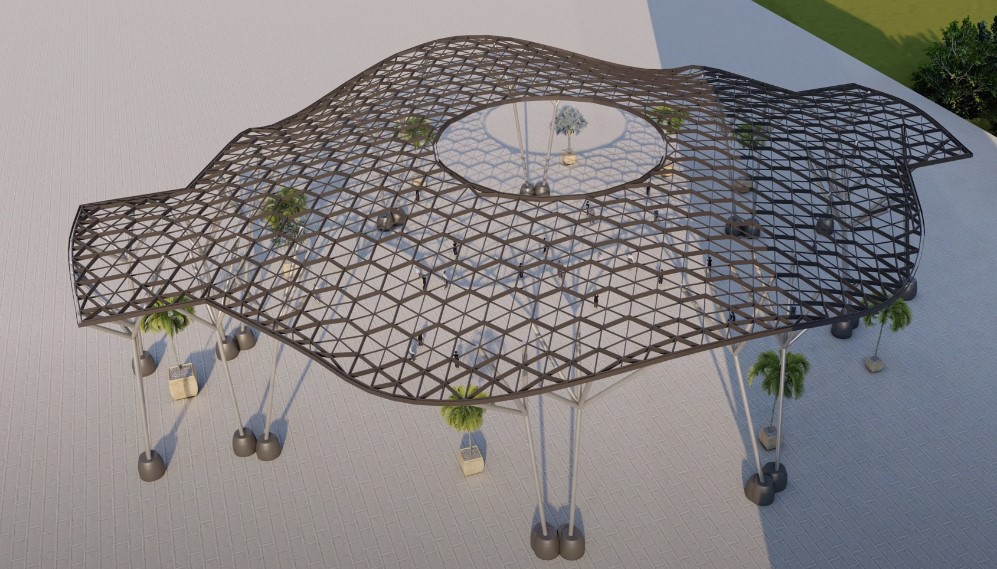
Single-layer structures represent a significant innovation in architectural design, moving away from traditional structural approaches and embracing a more minimalist, functional, and nature-inspired design philosophy. This design approach aims to reduce complexity and achieve aesthetic unity by integrating the basic load-bearing elements of structures into a single plane.
This design approach allows architects to push boundaries and respond to contemporary expectations, creating new and groundbreaking structures outside of traditional architecture. Therefore, Single Layer Structures roofs increase diversity in the architectural world, paving the way for the creation of unique and striking works.
Features
Single-layer roofing systems have many features, but their main distinguishing features are as follows:
Minimalism: Single-layer structure designs focus on reducing and simplifying the basic layers that make up the structure. This minimalist approach aims to eliminate unnecessary details and complexity. By avoiding unnecessary details and simplifying the basic load-bearing elements, these designs present a minimalist look. Thus, the complexity of the roof is minimized.
Single-layer structure: These roof designs focus on a single layer or plane. Instead of the multi-layered structure used in traditional roof designs, Single Layer Structures roofs combine the basic load-bearing elements in a single plane.
Variety of slopes and forms: These roof designs can enhance the architectural diversity of the roof by playing with various slopes, forms, and openings. This allows the roof to be aesthetically diverse and eye-catching.
Integration with nature: Single Layer roof designs are generally inspired by nature. In this context, organic forms, natural materials, and environmental interactions play an important role in the architect's design process. This ensures that the structure is in harmony with its surroundings and emphasizes natural beauty.
Functionality: The design is created not only with aesthetic considerations in mind but also with the aim of making the structure more functional. In this system, each layer has a specific function, and this functionality is enhanced using design elements.
Innovative production: Single Layer Structures enable the use of innovative materials and technologies in addition to traditional building materials. This allows for the use of thinner and more durable materials compared to traditional roofing materials. Furthermore, it is possible to experiment with different material combinations to improve the structural properties of these roofs.
Aesthetic appearance: Single-layer roof designs generally incorporate aesthetic integrity. The harmonious design is achieved by making all elements of the structure appear as if they are joined on a single plane.
Applications of Single Layer Structures:
Single layer roof designs have flexible and diverse structural features suitable for various applications. This design approach has the potential to meet different needs and offer solutions in terms of aesthetics, functionality, and sustainability in spaces. This system is preferred in many areas, especially public buildings, residences, gyms, and commercial centers.
Single-layer structure roof designs offer a wide range of uses, adapting to different functions and architectural needs. These designs are a popular option for projects seeking architectural diversity and innovation. To learn more about this design and to acquire one, you can contact our company and move away from ordinary designs by keeping up with the latest architectural trends.