
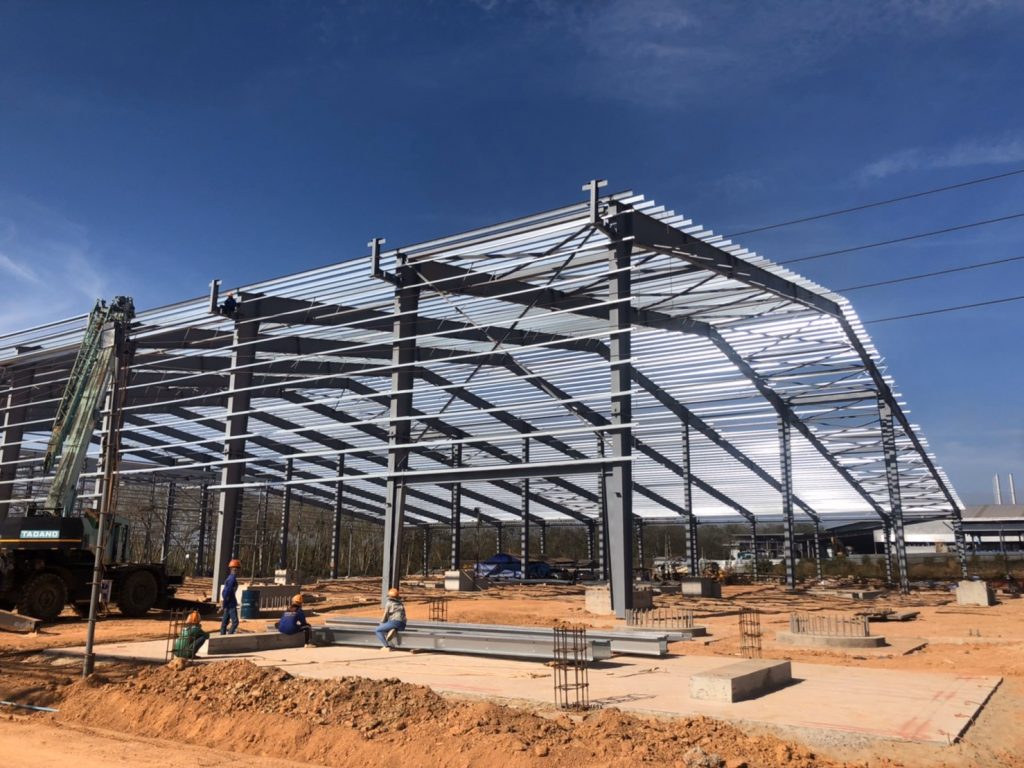
Steel roofs were first produced using advanced construction technologies that emerged during the Industrial Revolution. The industrialization process led to significant advancements in steel production, resulting in a much wider range of steel materials. With the development and acceleration of its production, steel became a new and important material in the construction sector and began to be widely used.
History of Steel Roofs
From the beginning of the 19th century, the use of steel roofs became much more widespread. Especially in the United States, steel roofs became frequently preferred for the construction of large buildings and skyscrapers. Steel roofs became popular because they provided an excellent load-bearing system for projects requiring high structures and large spans.
From the mid-20th century onwards, steel roofs began to be used in various industrial structures such as factory buildings, warehouses, and train stations. The durability and flexibility of steel provided an ideal solution for industrial projects requiring large spans and spacious areas. During this period, steel roofs came to the forefront, particularly for their use in industrial buildings.
Steel Roofs in the World
Today , steel roofs are preferred in many types of structures worldwide. They are used in industrial facilities, shopping malls, stadiums, airports, educational institutions, sports facilities, market areas, and residential projects. This is because steel roofs offer flexible design options, supporting architectural originality and adding an aesthetic touch to the structure.
The use of steel roofs is constantly increasing worldwide, driven by technological advancements in the construction industry. Steel roofs have become a widely preferred roofing system in construction projects due to their reliability, durability, aesthetics, and environmental benefits. Their high performance, flexibility, and wide range of applications give steel roofs a significant position in the construction sector.
Another reason why steel roofs hold a significant position today is their rapid assembly capability. Steel roof components are manufactured in factories and easily transported to the construction site for assembly. This shortens construction time and accelerates the project completion process. In addition, steel roofs have the potential to improve energy efficiency. When combined with a good insulation system, steel roofs can reduce energy consumption in buildings and support environmental sustainability.
The Future of Steel Roofs
Steel roofs will continue to play a significant role in the construction industry in the future due to their durability, aesthetic appeal, and technical advantages. With the influence of sustainability, technological advancements, and innovative designs, steel roofs will be preferred as a more efficient, reliable, and environmentally friendly option. Therefore, space frame roofs will remain a sought-after roofing system for both architects and clients in future building projects.
Steel roofs , with advancements in technology and design in the construction industry, constitute a structural system that will maintain its importance in the future as it does today. In this regard, the future of steel roofs will be shaped by the following factors:
- Sustainability: With increasing environmental awareness, sustainability will be even more prominent in the future. In this context, steel roofs stand out as an environmentally friendly option because they are produced with recyclable materials. Furthermore, when combined with a good insulation system, steel roofs can provide energy efficiency, meeting the requirements of green buildings. Therefore, steel roofs offer advantages in terms of sustainability.
- Advanced Technologies: Advanced technologies in the construction sector will enable the more effective and efficient design and construction of space frame systems. Information technologies, simulations, and 3D design tools will help in the more precise planning and optimization of steel roofs.
- Lightweight and Flexible: Advanced material technologies and structural design approaches will enable steel roofs to be lighter and more flexible. This will allow structures to have larger spans and more creative architectural solutions.
- Energy Production: In the future, steel roofs may be integrated with solar panels or other energy production systems. This will enable steel roofs to become more than just a structural element; they will become a component that generates energy and contributes to sustainability.
- Innovative Designs: Architectural trends and demands will ensure that steel roofs feature more innovative and attractive designs. The use of advanced technologies will enable projects where steel roofs can have complex geometries and unique forms.
Our company, Uzay Sistem , has been involved in steel roof projects for many years and possesses significant experience. Having completed hundreds of large projects both domestically and internationally, our company operates with the principle of "quality production".
With years of experience and expertise, our expert team provides long-lasting and durable space frame roof services to our clients through original design, quality workmanship, and meticulous work strategies. We are always ready to support you in your space frame roof project. You can contact our company for detailed information about our work.